


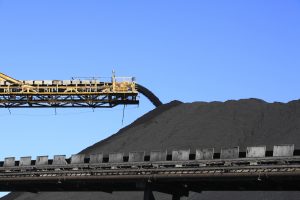
 Ramaco got the coal moving again in weeks. Its insurers took years to pay. Under West Virginia’s Hayseeds rule, the cost of that wait can give rise to a separate and substantial recovery.
Policyholders and insurers alike should take note.


Ramaco got the coal moving again in weeks. Its insurers took years to pay. Under West Virginia’s Hayseeds rule, the cost of that wait can give rise to a separate and substantial recovery.
Policyholders and insurers alike should take note.



A zero on a Statement of Values does not necessarily mean zero coverage. Yet after a major property loss, insurers often point to reported business interruption (BI) values as though they define—or cap—the coverage available at a particular location.
They often do not.

Corporate transactions are carefully negotiated to allocate assets and liabilities. However, one valuable asset is frequently overlooked and may fall by the wayside during this process: the right to recover under historic insurance policies. This can result in one entity holding the liabilities, while rights under the insurance policies purchased to cover the risk remain with another entity. Companies considering any form of corporate transaction should consult with experienced coverage counsel to ensure transaction documents allocate rights to insurance coverage as intended.



The U.S. Court of Appeals for the Tenth Circuit’s just-issued decision Church of Jesus Christ of Latter-Day Saints v. National Union Fire Insurance Company of Pittsburgh, PA, et al., has established an important new tool for general liability insurance policyholders facing vexing problems involving liability for patterns of multiple harm arising from the same general circumstances or conditions, like sex abuse cases. The court determined that the standard CGL “occurrence” definition is ambiguous and must therefore be interpreted in whichever manner maximizes coverage for the policyholder.


Representations and Warranties Insurance (RWI) has become a standard deal tool. Buyers purchase it to obtain recourse independent of the seller. RWI can strengthen a Buyer’s bid for attractive targets while giving Sellers a clean exit: no indemnity, minimal escrow and little post-closing exposure (absent fraud). Commentators have devoted much attention to RWI’s role in facilitating acquisitions, but Buyers often overlook the policy’s value as a dedicated, meaningful source of recovery when a Seller representation proves inaccurate.

Over the last decade, governmental plaintiffs have secured tens of billions of dollars in settlements from certain manufacturers, wholesale distributors and pharmacy operators that allegedly contributed to a nationwide epidemic of opioid use disorder (OUD), a/k/a addiction. Bellwether litigation has centered on expansive “public nuisance” claims—reminiscent of covered pollution and gun violence claims that surfaced decades ago—alleging that defendants throughout the opioid supply chain caused and must remediate widespread OUD by changing their practices and funding the treatment of persons who sustained opioid-related injuries. Encouraged by the settlement leverage opioid claims generated, the plaintiffs’ bar has expanded public nuisance litigation in cases involving climate change, ultra-processed foods, lead paint and, more recently, social media.

As generative artificial intelligence (gen AI) becomes embedded in day-to-day commercial operations across virtually every sector, businesses are confronting a parallel rise in litigation and regulatory risk tied to AI development, deployment, and disclosure. Insurers are responding in kind. Perhaps in recognition that many traditionally worded liability policies may otherwise respond to AI-related claims, a growing number of carriers have begun introducing exclusions and endorsements aimed at narrowing or eliminating coverage for these exposures.

When corporate transactions engender shareholder litigation, Directors’ and Officers’ liability insurers all too often invoke the so-called “bump-up” exclusion to bar coverage of such claims. These provisions, common in D&O policies, purport to exclude coverage for settlements or judgments that effectively increase the deal price in acquisitions, the theory being that D&O insurance was not intended to act as a backstop to the share price obtained by management in selling a company. D&O insurers have for years tried to expand the application of these provisions in attempts to narrow Side B/C coverage for M&A transaction-related losses.


In a recent decision from the Southern District of New York, Judge Jed S. Rakoff rejected an insurer’s attempt to stretch a “Subsequent Acts” exclusion beyond its text and denied a motion to dismiss a policyholder’s coverage action. The decision in AmTrust Financial Services, Inc. v. Forge Underwriting Ltd. underscores a familiar but critical point in New York insurance law: exclusions are strictly construed, and insurers bear a heavy burden when they attempt to defeat coverage at the pleading stage.

Most insurance policies use standardized wording drafted by the insurance industry. Coverage disputes frequently center on these standardized wordings. Policyholders only sporadically face significant claims that escalate into disputes with their insurers and result in litigation. Insurers, on the other hand, litigate identical or similar claims on a regular basis.